
Last updated November 21, 2026
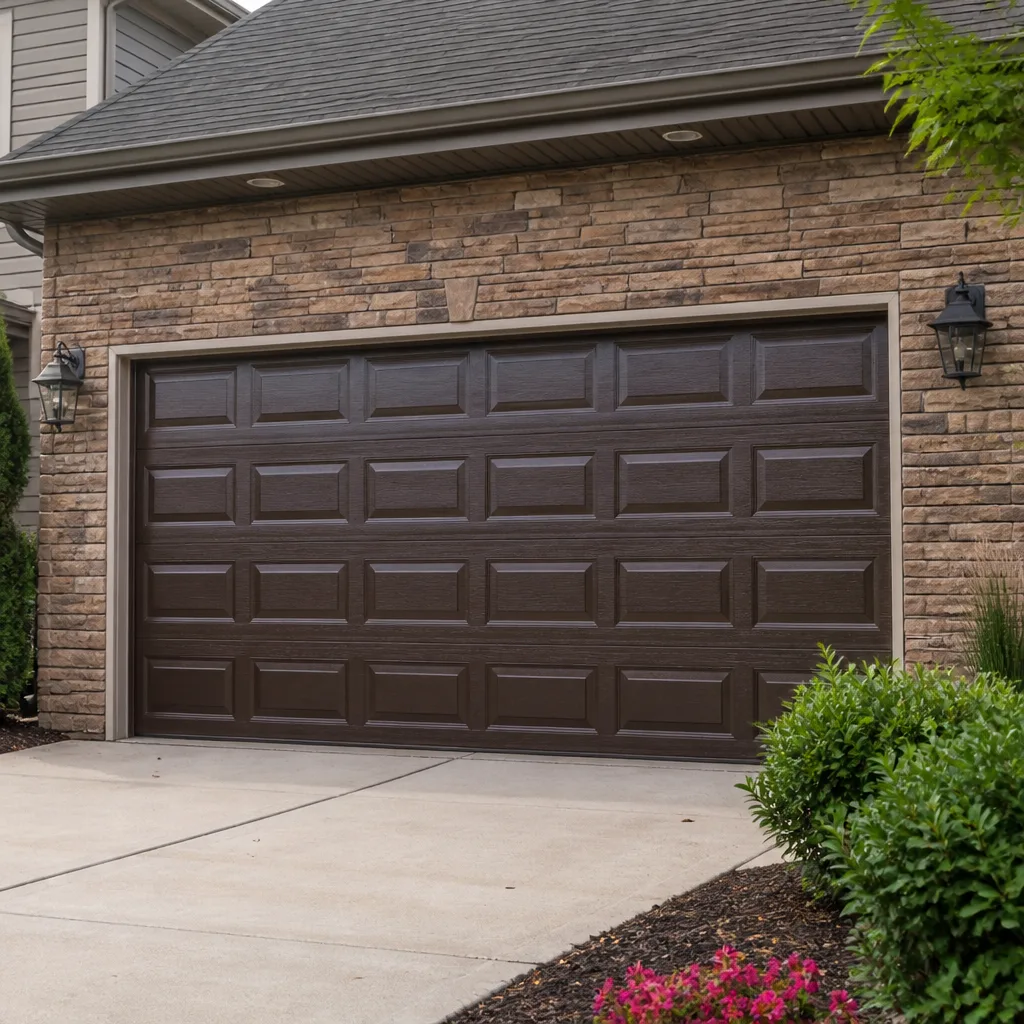 Raised-panel steel
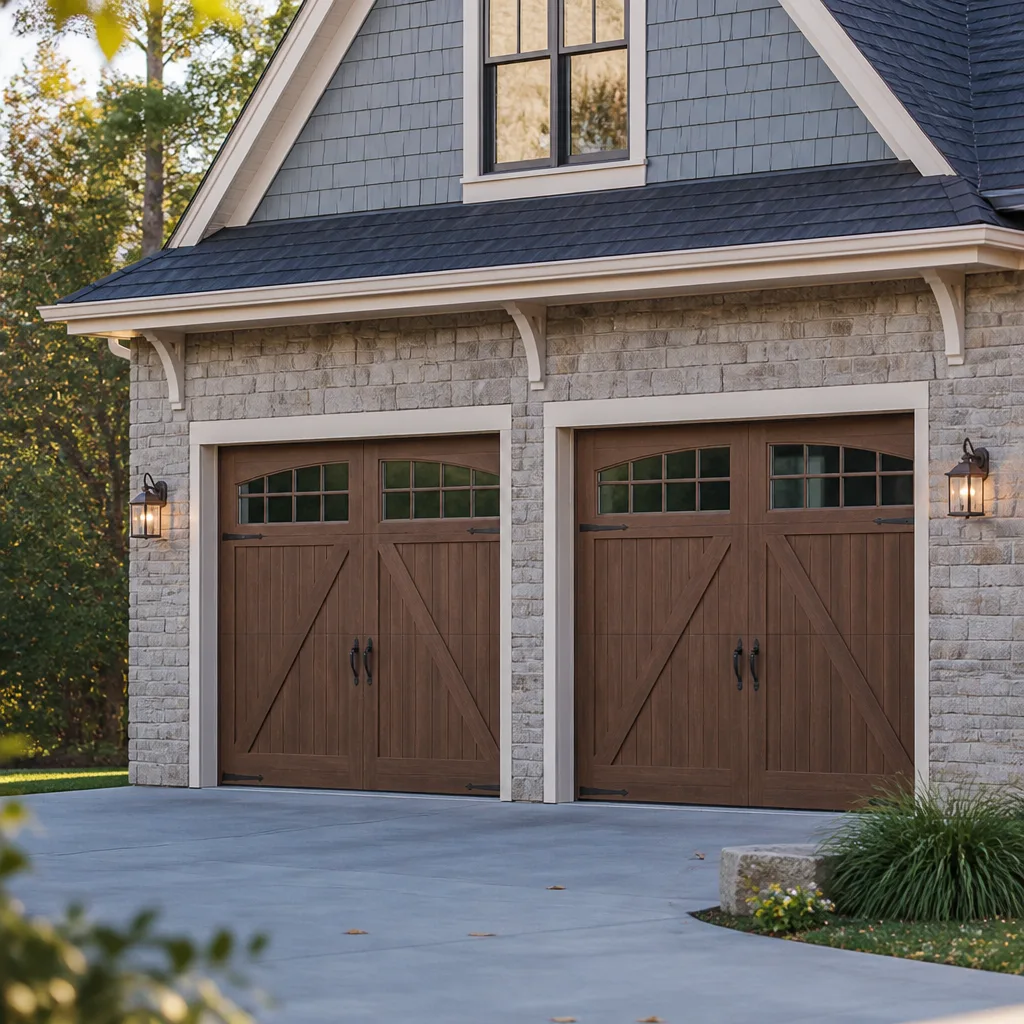 Carriage house
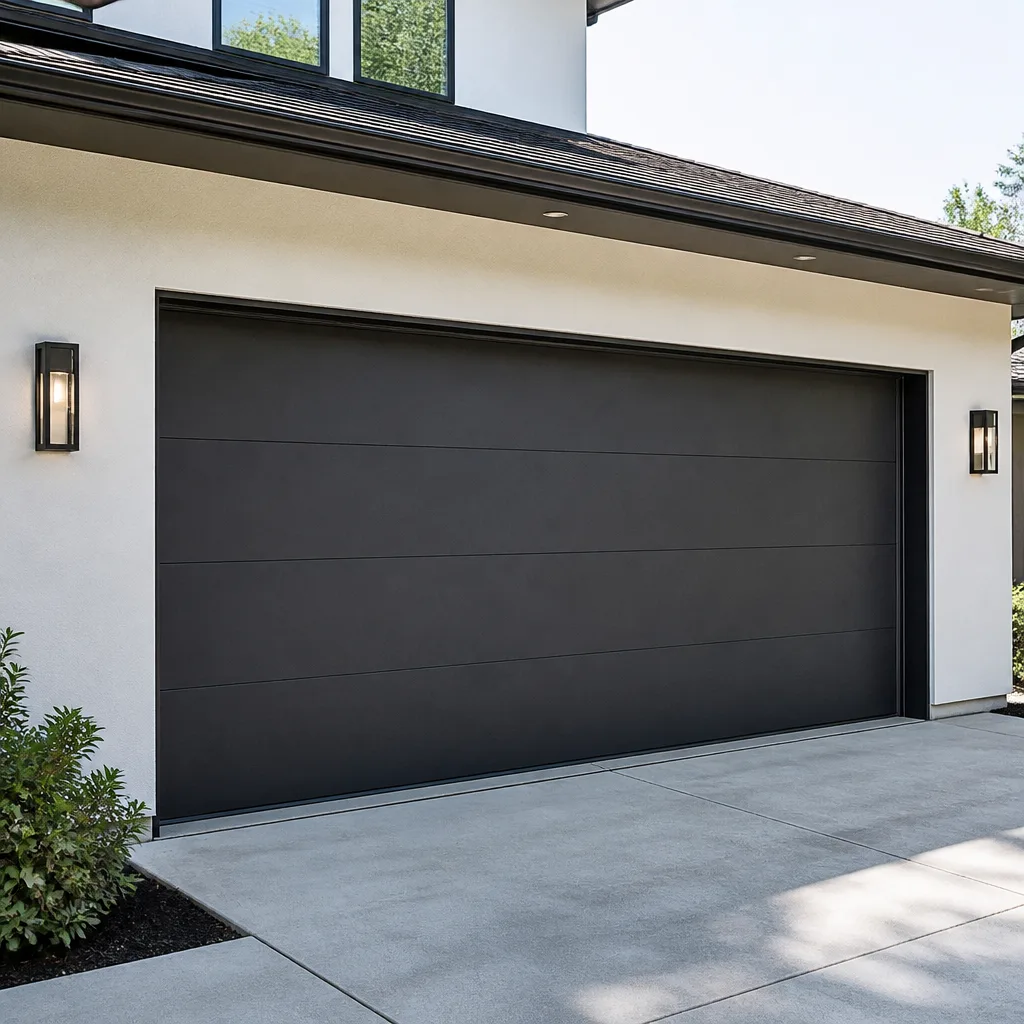 Modern flush
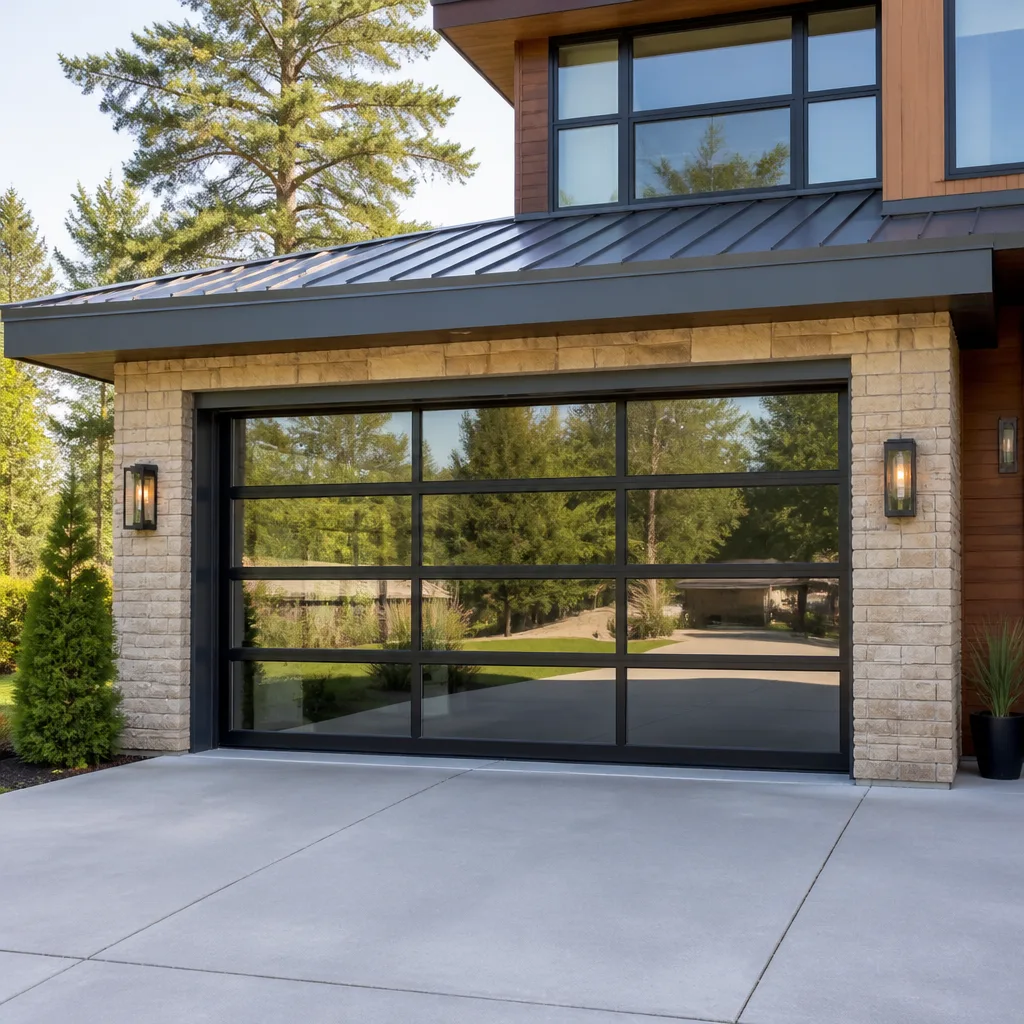 Full-view glass
 LiftMaster openers
 Chamberlain openers
Full 25-point door and opener safety check with every visit - springs, cables, rollers, tracks, and your LiftMaster or Chamberlain opener included
You get a price before we start. It does not change when the pro arrives.
Get your free estimateGarage Door Emergency Preparedness Guide for Bustleton Homes
A garage door that won’t open is a problem. A garage door that won’t open and traps the only car in the house is an emergency, and it’s the one home failure most Bustleton households have never rehearsed. Here’s the part that surprises people: the hardest part of most garage door emergencies isn’t the repair. It’s the thirty minutes of confusion before anyone figures out how to get the car out manually, or whether the door is safe to touch at all. This guide walks through the readiness steps that turn a panic into a procedure: manual release on the openers common in this neighborhood, what to do when a spring snaps, how to seal a door that fails mid-storm, and the specific failure states where you should not operate the door under any circumstances. You’ll come away knowing exactly what to check, what to practice, and who to call.
Quick Answer
Garage door emergency readiness for a Bustleton home comes down to three things you should confirm and practice before you need them: know where your opener’s manual release cord is and how to use it, test your emergency disconnect and backup battery, and know which failure states (broken cable, bent track, one failed spring in a two-spring system) mean the door should not be moved at all. When a door won’t open, the safest first move is a trained professional – our garage door repair team can diagnose and fix the cause, and spring work in particular is not a do-it-yourself task.
Styles & brands we work with
- Raised-panel steel
- Carriage house
- Modern flush
- Full-view glass
- LiftMaster openers
- Chamberlain openers
Table of Contents
- Why Garage Door Emergencies Catch Bustleton Homeowners Off Guard
- How to Use the Manual Release on the Most Common Openers in Bustleton
- What to Do When a Spring Breaks: The Two-Person Technique
- When a Door Should Not Be Operated at All
- Emergency Weatherproofing When a Bottom Seal Fails Mid-Storm
- The Pre-Emergency Checklist: Three Things to Practice
- What Happens During a Bustleton Power Outage
- Preventing the Next Emergency: What to Inspect Before It Fails
Why Garage Door Emergencies Catch Bustleton Homeowners Off Guard
Most households use the garage as the primary entrance. It’s the door that lets the car out, the groceries in, and the recycling to the curb. That everyday reliance is exactly what makes a failure so disruptive. When the door won’t lift, the whole morning routine stalls, and the natural reaction, forcing the door or the opener, is usually the wrong one.
Bustleton’s housing stock adds a layer of complexity. This is a neighborhood of established single-family homes and rowhouses, and many of its garages have been through multiple opener upgrades over the years. That means a single property can have a newer smart opener controlling a much older door, or a legacy mechanical unit still running the original torsion system. In our experience, the door and the opener are often from two different generations and two different brands, and each has its own manual release behavior and its own failure points. The homeowner who assumes every opener works the same way gets stuck.
Weather matters here too. Bustleton winters bring hard freezes, and a garage door that’s frozen to its seal or stiff with cold will behave differently than one in the summer. Spring and fall storms can drive water under a worn bottom seal. And power outages, whether from a storm or a grid fault, leave a homeowner with a dead opener and a car behind a door that won’t budge.
The fix isn’t memorizing every failure mode. It’s building a small, practiced protocol so you know what to do in the first five minutes. That’s what the rest of this guide sets up. When a door is stuck, blocked, or won’t respond, our Garage Door Repair Bustleton team treats emergency service as a core category, not a reluctant exception.
How to Use the Manual Release on the Most Common Openers in Bustleton
Every residential opener with a trolley has a manual release, and it’s the single most important thing to learn before an emergency. On almost all of them, the release is a red cord or handle hanging from the trolley near the door. Pulling it disconnects the door from the opener so you can lift it by hand. That’s the good news. The part homeowners miss is what happens to door balance the moment you pull it.
Once the door is released, nothing is holding it up but the springs and your hands. If the springs are healthy, the door should lift with modest effort and stay put when you let go at about waist height. If it drops or races up, the balance is off, and the door is not in a state to be operated by hand.
Here’s how the release differs across the openers we work on most in Bustleton:
- LiftMaster and Chamberlain: These are the most common openers in the neighborhood. The red release cord hangs from the trolley on the rail. Pull straight down and slightly toward the door. If the door has a backup battery opener, the release still works the same way; the battery only keeps the motor alive.
- Genie: The release is a red handle on the trolley, usually with a shorter cord. On older Genie units the trolley can be stiff, so pull firmly and in line with the rail rather than sideways.
- Raynor: Raynor openers and doors are less common but still present in Bustleton garages. The release is a red cord on the carriage assembly, and it disconnects the same way. Raynor doors often pair with other brands of opener, so identify the opener, not the door, before you pull.
- Older Craftsman and chain-drive units: The release is a red T-handle. On a chain-drive opener the trolley can bind if the door is slightly off-track, so pull gently and stop if you feel resistance.
- Jackshaft and wall-mount openers: These mount beside the torsion bar rather than on a rail, and they have a separate release. If your opener is wall-mounted, the release isn’t on a ceiling rail, and pulling a random cord can be a mistake.
The best time to locate your release is right now, standing in the garage, before anything fails. Find the cord, note its color and location, and confirm you can reach it from the floor. If you can’t, you’ve found the first thing to fix. Manual release is only half the readiness picture; the opener itself needs to be healthy for normal operation, so if yours is acting up, that’s a job for garage door opener repair.
What to Do When a Spring Breaks: The Two-Person Technique
A broken spring announces itself with a loud bang, and the door suddenly becomes very heavy. If the door is already up when the spring lets go, don’t assume it’s fine. A door with a broken spring can drop without warning. The safest response is to clear the area, keep everyone out from under the door, and call a professional.
If you absolutely must move a door with a broken spring to get a car out, it’s possible, but only with a specific two-person technique. One person lifts the door by hand from the bottom panel while the second person stands at the side, watching the cables and guiding the door up evenly. The reason for two people is cable wrap: when one spring fails, the door’s weight shifts onto the remaining spring and the cables, and lifting unevenly can cause a cable to jump its drum or wrap. That’s the kind of failure that can turn a stuck door into a dangerous one.
Here’s the technique, stated carefully because it’s a load-bearing operation:
- Clear the area under and around the door. Make sure no one is on the other side.
- Have one person lift from the bottom panel, using both hands and the whole body, slowly and evenly.
- The second person stands to the side and watches the cables and drums, calling out if a cable starts to slacken or jump.
- Lift only as far as needed to clear the car, then lower the door slowly and prop it if it won’t hold.
- Do not leave a door with a broken spring up. Get it down and secured, then call.
This is a one-time extraction method, not a way to keep using the door. A door with a failed spring is not safe for daily use. Spring repair is one of the most mechanically dangerous jobs in the trade, and it’s a core specialty for us because it takes proper tools and training, not a general handyman visit. If a spring in your Bustleton home has let go, that’s a job for a specialist, not a weekend project.
When a Door Should Not Be Operated at All
Some failure states are a stop sign. In these cases, operating the door, by opener or by hand, risks a complete drop or a worse mechanical failure. If you see any of the following, leave the door where it is and call a professional.
- A broken cable: The cables carry the door’s weight alongside the springs. A snapped or slack cable means the door is no longer safely suspended. Don’t touch it, don’t run the opener, and don’t try to lift it by hand.
- A bent or kinked track: The rollers run on the track, and a bent section can let a roller pop out, which can drop one side of the door. Don’t force the opener to push through it.
- One spring of a two-spring system has failed: A two-spring door is designed to share the load. With one spring gone, the remaining spring is carrying more than it was built for, and an opener operating the door can overload it. Treat the door as immobile until it’s repaired.
- A door that has come off its track: If a roller has left the track or the door is visibly crooked, any movement can send it down unevenly.
- Visible damage to the torsion bar, drums, or end plates: These are the high-tension parts of the system. Any visible damage is a hands-off situation.
We’ve seen homeowners try to force a door with a broken cable back onto its track, and it’s exactly the situation that turns a repair into a much bigger job. If you’re not sure whether your door is in one of these states, don’t test it to find out. Call and describe what you see. A few minutes on the phone can prevent a dangerous mistake.
Emergency Weatherproofing When a Bottom Seal Fails Mid-Storm
A bottom seal that tears or pulls loose during a storm lets water and wind straight into the garage. The repair can wait for a scheduled visit, but the leak can’t, so the goal is a temporary seal that holds until a technician can replace the seal properly.
Here’s what to do when a seal fails in the middle of active weather:
- Close the door fully and confirm it’s seated against the floor. If the seal has torn, the door may not close flush, so check the gap.
- Lay a rolled towel or a folded tarp along the inside of the door at floor level to catch water and block the wind-driven rain.
- If the gap is larger, a length of foam pipe insulation or a pool noodle pushed into the gap can hold the line temporarily.
- Keep the door closed and avoid cycling it repeatedly, since each cycle can tear the seal further.
- Once the weather passes, schedule the seal replacement. A torn seal is a quick fix when it’s addressed, and it’s what keeps the weather and pests out over time.
Bustleton’s freeze-thaw cycles make bottom seals work harder than in milder climates. A seal that’s stiff with cold can crack when the door closes on it. If your seal is more than a couple of seasons old and feels hard or brittle, it’s a candidate for replacement before the next storm tests it.
The Pre-Emergency Checklist: Three Things to Practice
Readiness comes down to three things you should confirm and practice before you need them. None of them take more than a few minutes, and all of them pay off the moment something goes wrong.
1. Manual release. Find the red release cord on your opener and confirm you can reach it and pull it. Then practice the release once, with the door down, so you know how it feels. You’ll discover whether the door is balanced and whether the cord is within reach.
2. Emergency disconnect. This is the same release in most cases, but the point is to confirm it works smoothly. If the trolley is stiff or the cord is frayed, that’s a repair to schedule now, not later. A disconnect that binds when you need it is the difference between getting a car out and being stuck.
3. Backup battery status. Many modern openers, including LiftMaster and Chamberlain units common in Bustleton, run on a backup battery when the power goes out. Check the battery indicator on the opener and confirm it’s holding a charge. If your opener doesn’t have a backup battery, that’s worth knowing too, because a power outage means a dead opener and a manual release.
Run this checklist once a season. It takes ten minutes and it’s the difference between a practiced response and a scramble. For homes with a newer smart opener, it’s also worth noting that the app may show door status during a power outage even when the door won’t move.
What Happens During a Bustleton Power Outage
Power outages in Bustleton tend to come from storms and from the occasional grid fault, and they’re one of the most common reasons a garage door suddenly won’t open. The opener is dead, the door won’t lift, and the car is trapped inside.
The first move is the manual release. Pull the red cord on the trolley, lift the door by hand, and back the car out. If the springs are healthy, the door should lift with modest effort and you can close it by hand afterward. If the springs have failed or the door is otherwise compromised, don’t force it; use the two-person technique above, or leave the door and call.
If your opener has a backup battery, it may lift the door without manual release, but the battery only helps if it’s charged. That’s why the checklist step matters. On a Legacy mechanical unit with no battery, the manual release is the only way out, so know where it is.
When the power comes back, run the door once to confirm it cycles normally. If it doesn’t, or if the opener resets and loses its limits, that’s a call to a technician. During any power event, if you’re not sure the door is safe, call. We answer 24/7. Fast dispatch from 7am to 7pm, Sunday through Friday.
Preventing the Next Emergency: What to Inspect Before It Fails
The best emergency is the one you prevent. A short inspection a few times a year catches most of the failures that cause emergencies before they happen.
- Listen to the door. A grinding, scraping, or popping sound during operation usually means a roller, hinge, or track issue that’s getting worse. Address it before it becomes a stuck door.
- Check the balance. With the door released, lift it to waist height and let go. A balanced door stays put; one that drops needs spring or cable attention.
- Look at the springs. Torsion springs over the door and extension springs at the sides can show gaps or stretched sections before they break. Don’t touch them; just note anything that looks off and call.
- Inspect the seal. A stiff, cracked, or torn bottom seal is the first thing to fail in a storm. Replace it before the weather tests it.
- Test the safety sensors. The photo-eye sensors at the bottom of the track should stop the door when blocked. If they don’t, the door isn’t safe to operate.
If your opener is older and you’re not sure of its condition, a service visit can catch problems while they’re still small. And if you’re planning a replacement rather than a repair, that’s a scheduled job, not an emergency; our garage door installation service starts with a free measure and a written price.
Common Mistakes to Avoid
- Forcing a door with a broken spring. The opener or a hand-lift can’t safely move a door whose spring has failed. Forcing it overloads the remaining components and can cause a drop.
- Pulling the manual release without checking balance first. A released door can drop fast if the springs are weak. Test the balance with a hand on the door before you let go.
- Ignoring one failed spring in a two-spring system. Homeowners often assume the door still works because it lifts, but the remaining spring is carrying double its load. Treat it as immobile and call.
- Running the opener through a bent track. It can pop a roller and drop a side of the door. If the door is crooked, stop and call.
- Waiting on a torn bottom seal. In Bustleton’s freeze-thaw winters, a torn seal lets water and cold air in and can worsen with each cycle. Handle it before the next storm.
- Assuming every opener’s manual release is the same. Wall-mount and jackshaft openers don’t have a ceiling trolley cord. Know your opener before you pull.
- Leaving a door with a broken spring up. A door that’s up with a failed spring can drop without warning. Get it down and secured, then call a professional.
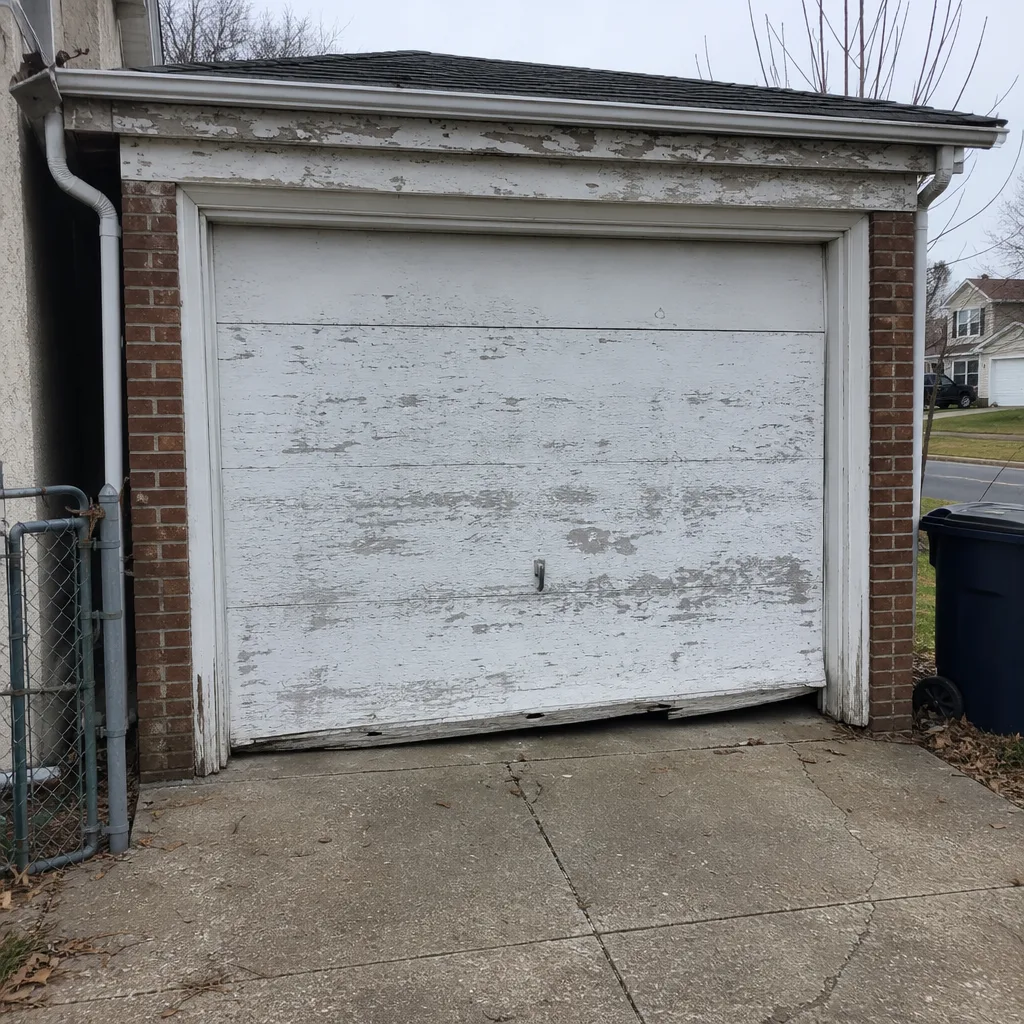
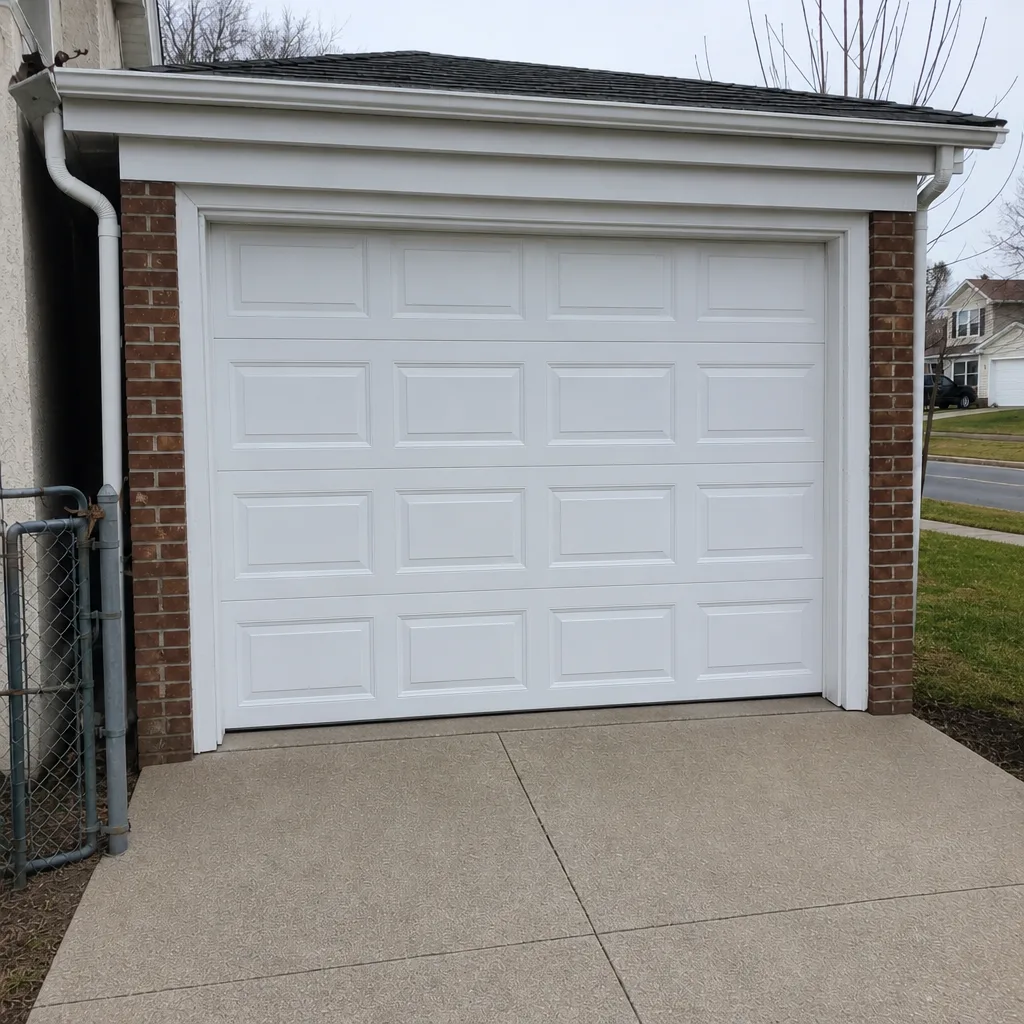
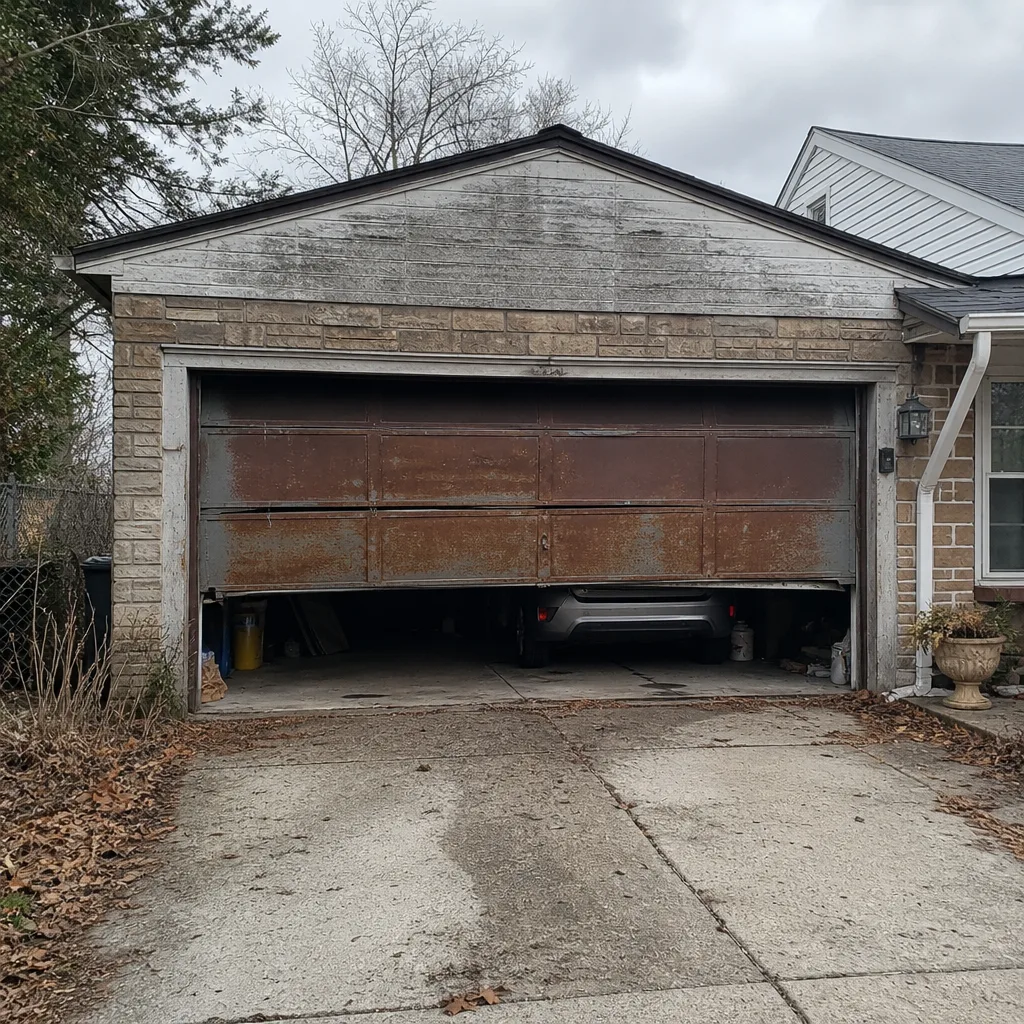
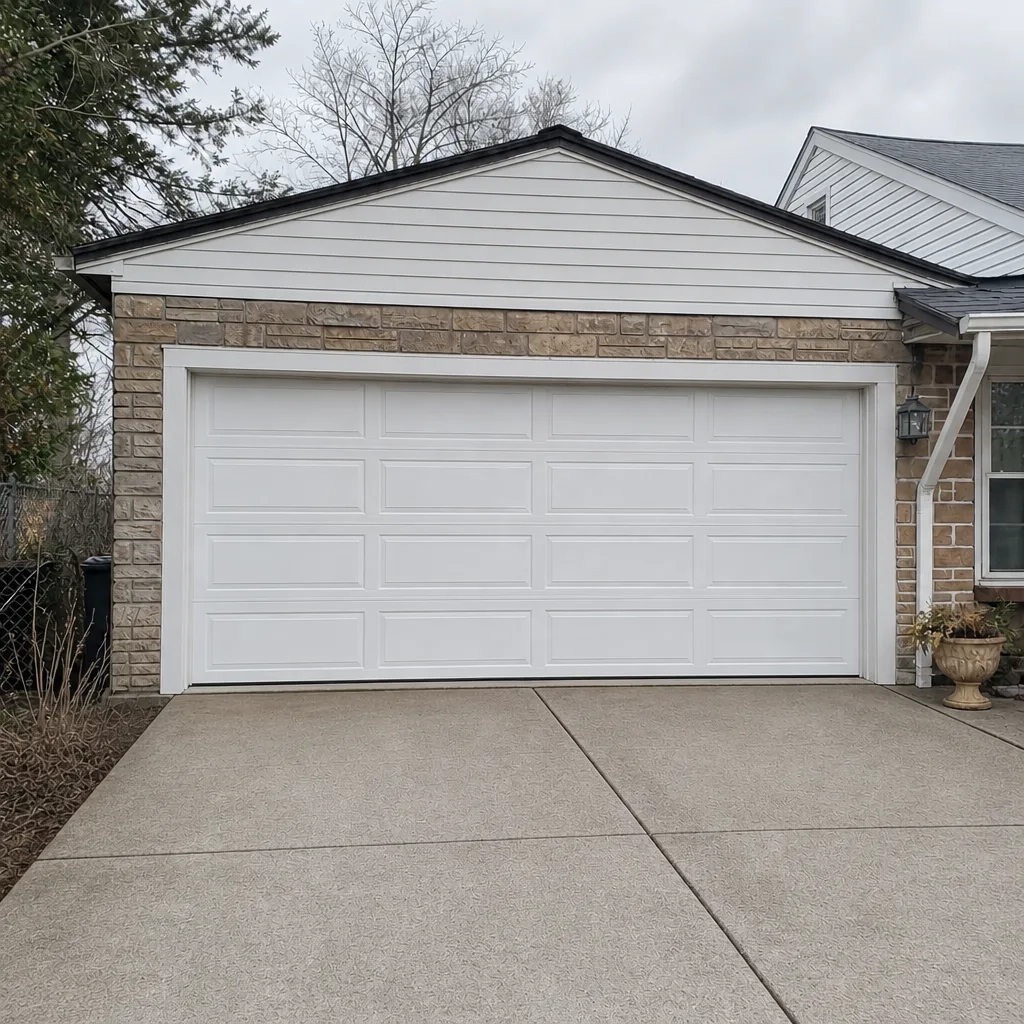
See the difference
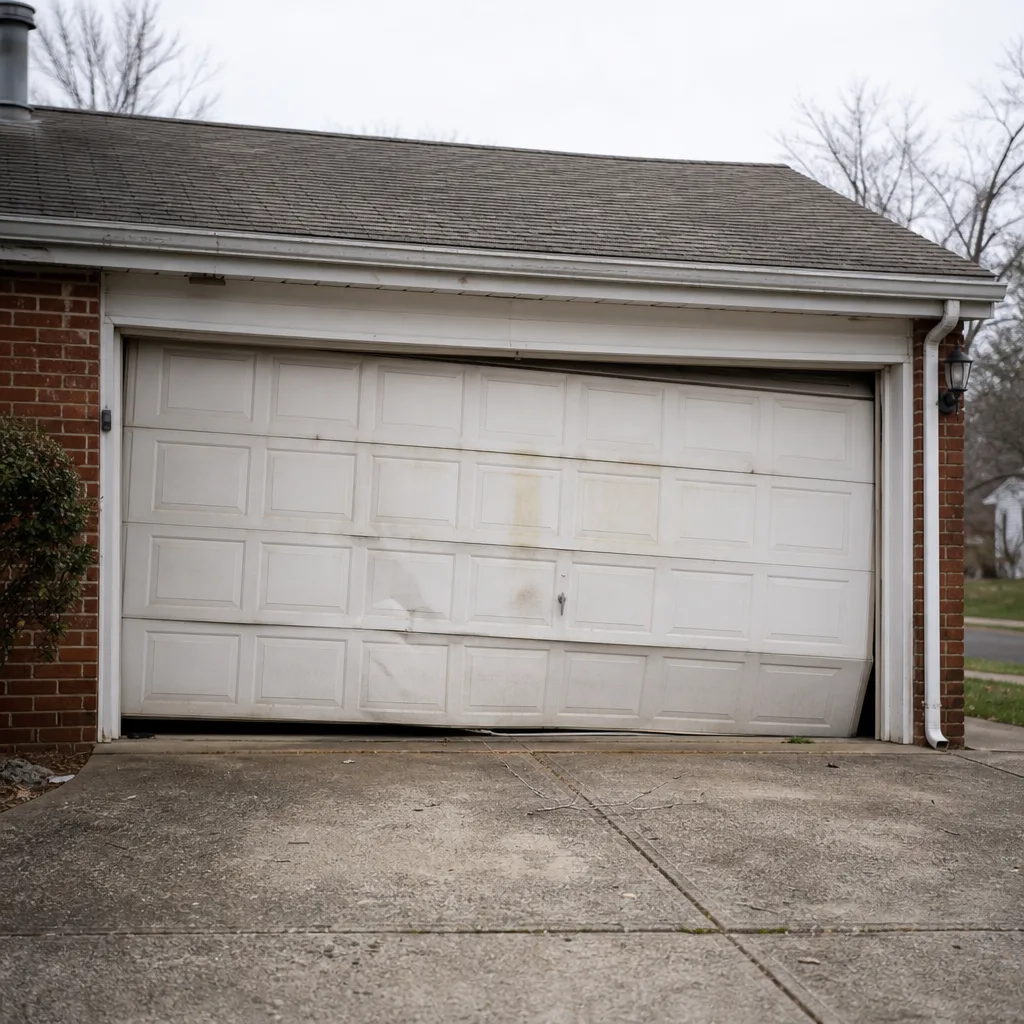 Before
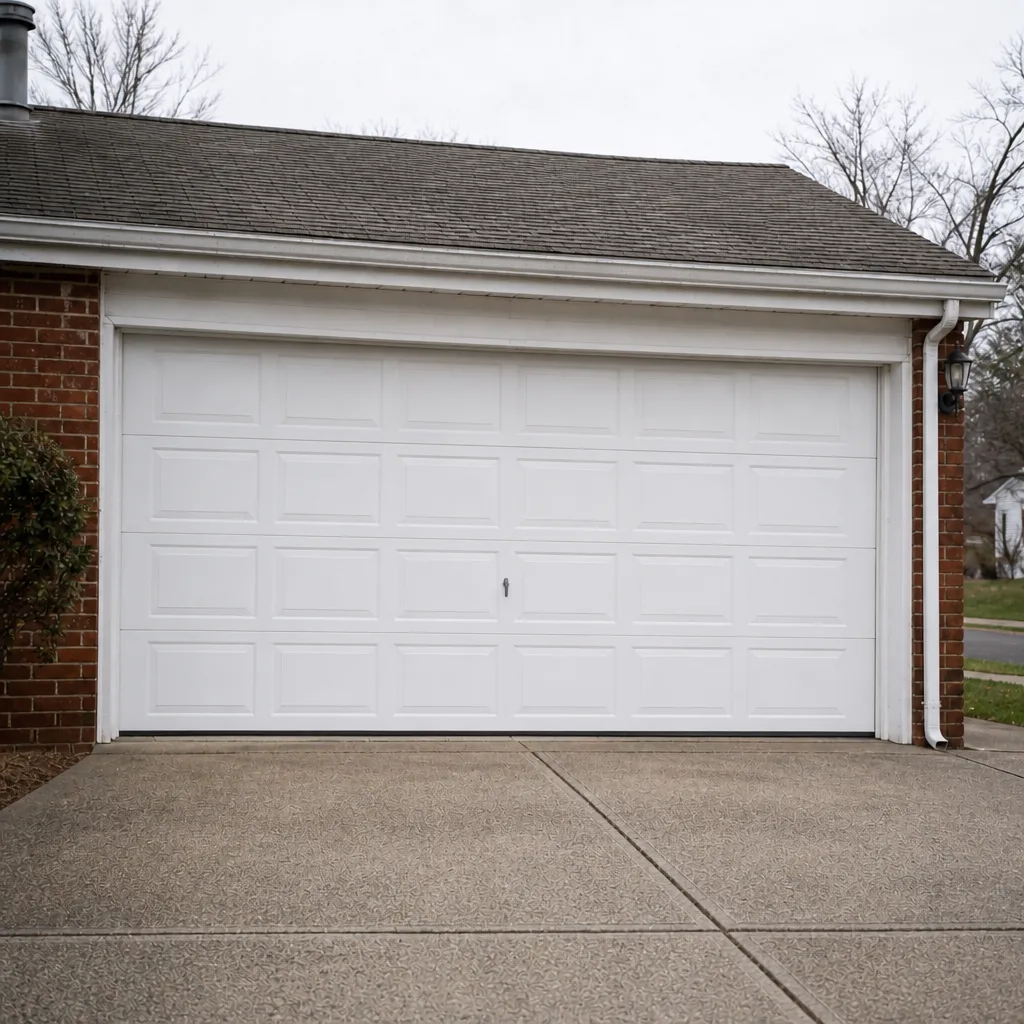 After
 Before
 After
 Before
 After
When to Call a Professional
Call a professional when a spring breaks, a cable snaps, a door comes off its track, an opener stops responding, or the door is visibly crooked. Don’t attempt spring or cable work yourself; the tension in those parts is dangerous and requires proper tools and training. If you’re unsure whether your door is safe to move, describe what you see on the phone and let a technician guide you. We work on your brand, whether that’s LiftMaster, Chamberlain, Genie, or Raynor, and we diagnose rather than guess. Garage Door Repair Bustleton offers free estimates in Bustleton. Call (844) 940-3088. We answer 24/7. Fast dispatch from 7am to 7pm, Sunday through Friday. Our technicians have up to 9 years of experience, and emergency service is a dedicated category for us, not a reluctant exception.
Frequently Asked Questions
Check whether the opener has power and whether the manual release is reachable, then pull the red cord on the trolley to disconnect the door and lift it by hand if the springs are healthy. If the door is heavy, drops, or the springs look damaged, stop and call a professional. Our garage door repair team can diagnose the cause and fix it, and estimates are free.
Yes, but only with the two-person technique: one person lifts the door from the bottom panel while a second watches the cables and guides it up evenly. The goal is to get the car out once and then secure the door, not to keep using it. A door with a broken spring isn’t safe for daily use, so call for spring repair right after.
Pull the red manual release cord on the trolley to disconnect the door from the opener, then lift the door by hand. If your opener has a charged backup battery, it may lift the door without the manual release. Check the battery indicator as part of a seasonal routine so you’re not caught without one.
Yes. The local professionals we connect you with are licensed and insured as their state requires. Our technicians are trained on 8 major brands, including LiftMaster, Chamberlain, Genie, and Raynor, so they work confidently on whatever system is installed. Call (844) 940-3088 for an exact quote after we’ve diagnosed the problem; the price is quoted and agreed before any work starts.
No. The price is set per job by the written estimate and agreed before any work starts, so you know the cost before we begin. If a repair needs a part that wasn’t in the original estimate, we discuss it with you first. Estimates are free, so call (844) 940-3088 for an exact quote.
Close the door fully, lay a rolled towel or tarp along the inside at floor level, and push foam insulation into a larger gap to stop the water and wind. Keep the door closed and avoid cycling it until the weather passes, then schedule the seal replacement. A torn seal is a quick fix when it’s addressed promptly.
The Bottom Line
Garage door emergencies are far less stressful when you’ve rehearsed the first five minutes. Learn where your manual release is and how it feels, check your backup battery once a season, and know which failure states (broken cable, bent track, one failed spring in a two-spring system) mean the door shouldn’t be moved at all. Keep the two-person technique in mind for a broken-spring extraction, and handle a failed bottom seal with a temporary towel or foam until a repair can be scheduled. Our team at garage door repair works on your brand, diagnoses rather than guesses, and treats emergency service as a core offering. If your door fails, call (844) 940-3088. We answer 24/7. Fast dispatch from 7am to 7pm, Sunday through Friday. Free estimates, and the price is agreed before any work starts.
Written by the team at Garage Door Repair Bustleton.